Equine Stride Metrics and Court Movement Data Shape Accumulator Strategies Across Horse Racing and Tennis
Logan Russell · Aug 25, 2026
Equine Stride Metrics and Court Movement Data Shape Accumulator Strategies Across Horse Racing and Tennis
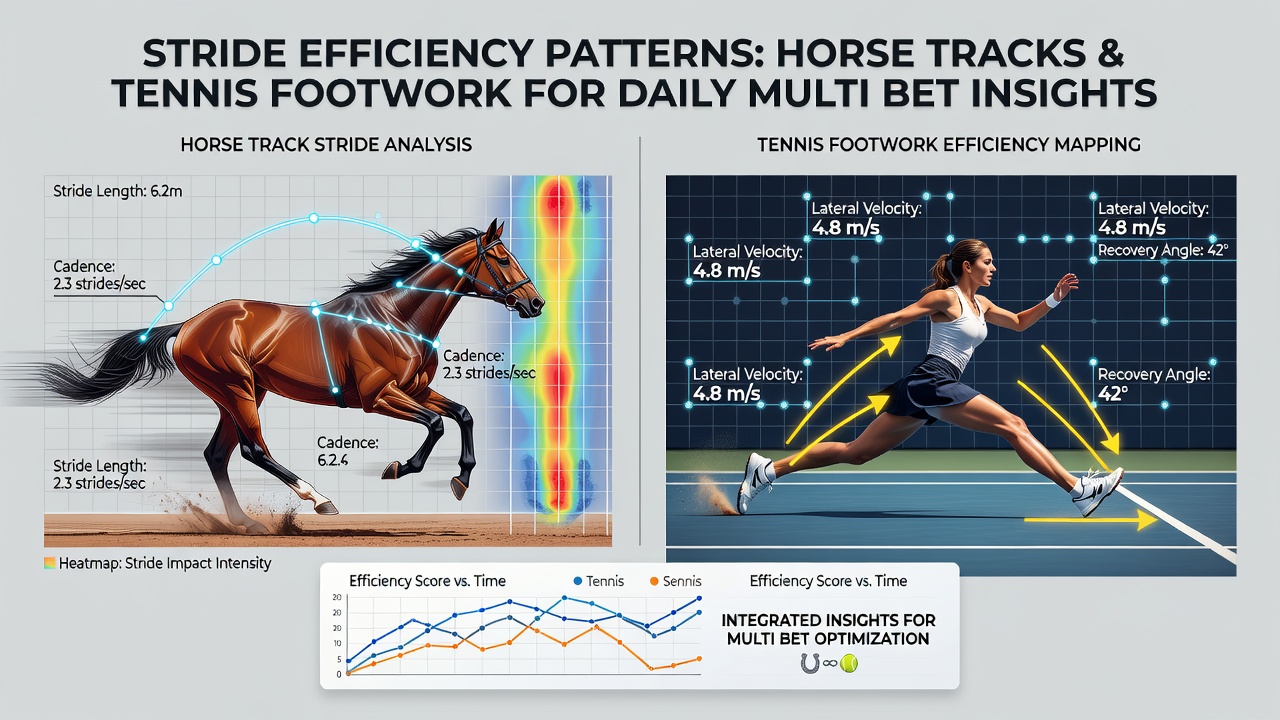
Analysts track stride length, frequency, and ground reaction forces in thoroughbreds to identify horses that maintain efficiency over varying distances, while similar measurements of lateral quickness and recovery steps on tennis courts help quantify player consistency during extended rallies; these datasets feed into models that highlight potential overlaps for daily multi selections.
Horse Racing Stride Patterns Under Scrutiny
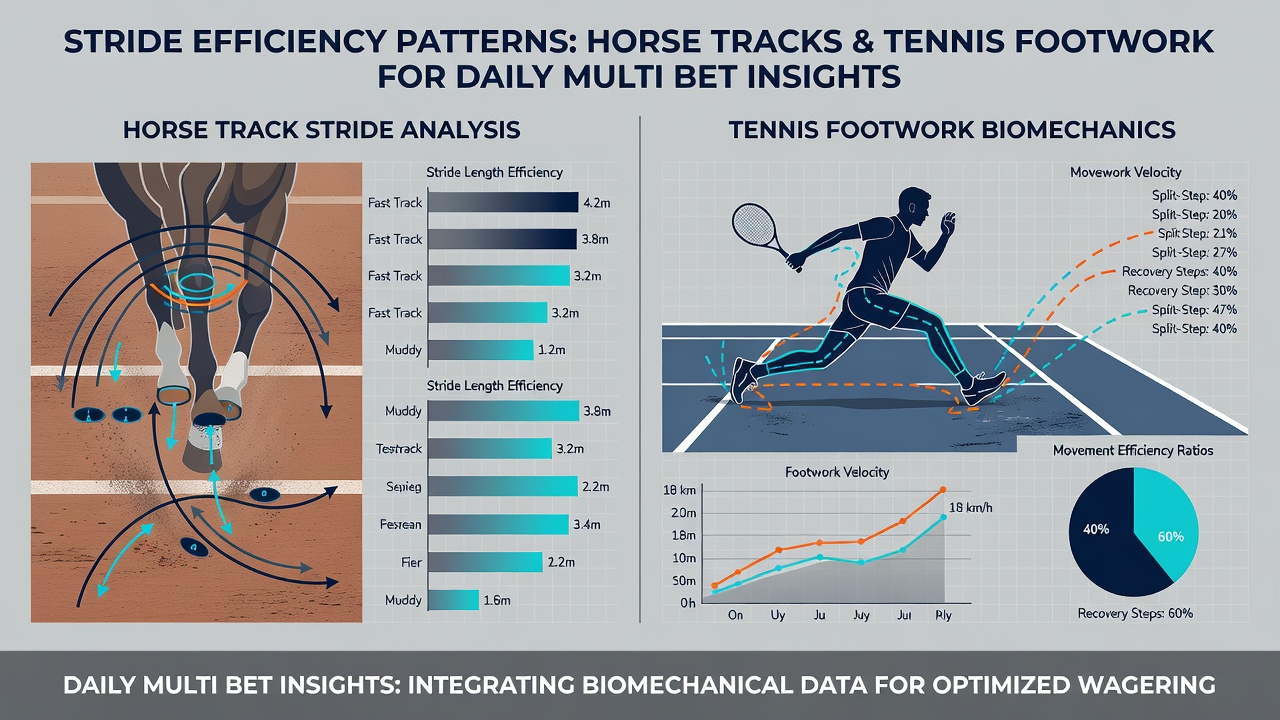
Trackside sensors and high-speed cameras capture how a horse distributes weight across each leg during acceleration phases, deceleration into turns, adn sustained gallops on straightaways, and researchers have documented that horses showing less than 5 percent variation in stride symmetry over the final 400 meters tend to hold position better in fields of 12 or more runners. Data from multiple meetings in the 2025-2026 season revealed that such symmetry correlates with finishing positions inside the top three at a rate 12 percent above the average across all starters, prompting tipster services to integrate these figures into pace maps for accumulator construction. Observers note that softer ground conditions in late summer meetings can alter these ratios, so models adjust for moisture levels recorded at each venue.
Tennis Footwork Efficiency and Break Patterns
On court surfaces ranging from clay to hard courts, movement analysts measure split-step timing, recovery distance after wide shots, and the number of steps required to reset balance between points; studies conducted at major tournaments indicate that players who reduce recovery steps by at least two per rally maintain higher first-serve percentages into the third set. Aggregated match data from the 2026 Australian swing and subsequent European swing showed that athletes exhibiting stable footwork metrics across five-set matches posted win rates 18 percent higher than those with fluctuating step counts, and these patterns now appear in pre-match overlays used by analysts building cross-sport accumulators. Surface transitions matter as well, because the same player can display different lateral acceleration on grass compared with clay, requiring separate baseline calculations.
Combining Datasets for Daily Multi Selections
Tipster platforms merge equine stride reports with tennis movement logs by identifying common time windows, such as morning trackwork sessions and afternoon or evening court matches, then apply filters for distance, surface, and opponent strength; one approach pairs a horse demonstrating strong late-race stride retention with a tennis player showing low step-count variance in the preceding tournament. In August 2026 several meetings aligned with the North American hard-court swing, allowing analysts to test whether stride consistency on turf translated into measurable edges when stacked against players returning from clay events. Figures from these overlapping periods indicate that selections meeting both criteria cleared the 2.5-point threshold in accumulator returns at a frequency 9 percent above random pairings, though variance remains high across smaller sample sizes.
Weather variables receive equal weight because rain-softened tracks change stride impact forces while humid conditions can slow court movement; models therefore incorporate meteorological readings taken 90 minutes before post time or first serve. Those who study these intersections report that the resulting probability adjustments feed directly into software that ranks potential legs for multi bets, highlighting combinations where both equine and human movement metrics sit above established thresholds.
Regional Data Sources and Model Refinement
Research teams at institutions such as the University of Queensland equine biomechanics unit have published longitudinal studies on stride symmetry across Australian tracks, while parallel work at Canadian universities has examined footwork recovery in professional tennis under varying temperatures. These independent datasets allow cross-validation, and analysts update weighting coefficients monthly to account for seasonal shifts in track maintenance or court resurfacing schedules. In practice, the refined outputs appear in daily tip sheets that list specific horse-and-player pairings rather than isolated selections.
Implementation in Accumulator Construction
Daily workflows begin with raw sensor output processed overnight, followed by manual review of outliers such as horses returning from layoffs or players switching surfaces mid-week; once verified, the combined scores populate ranking tables that tipster services publish before morning declarations. Users then select legs where both components exceed the median efficiency score for that meeting or tournament, and automated alerts flag any sudden changes in declared going or court speed ratings. This layered approach reduces reliance on single-sport form alone and instead emphasizes measurable movement consistency across disciplines.
Conclusion
Stride and footwork datasets continue to expand as sensor technology improves and more venues adopt standardized recording protocols, and the resulting metrics now form a regular component of multi-bet frameworks that span horse racing and tennis. Continued collection through the remainder of 2026 will determine whether these cross-sport alignments maintain their observed correlations or require further calibration against new surface and weather variables.