Time Zone Dynamics in Global Sports Scheduling: Football Matches, Tennis Tournaments, and Racing Fixtures
Sofia Carter · Aug 22, 2026
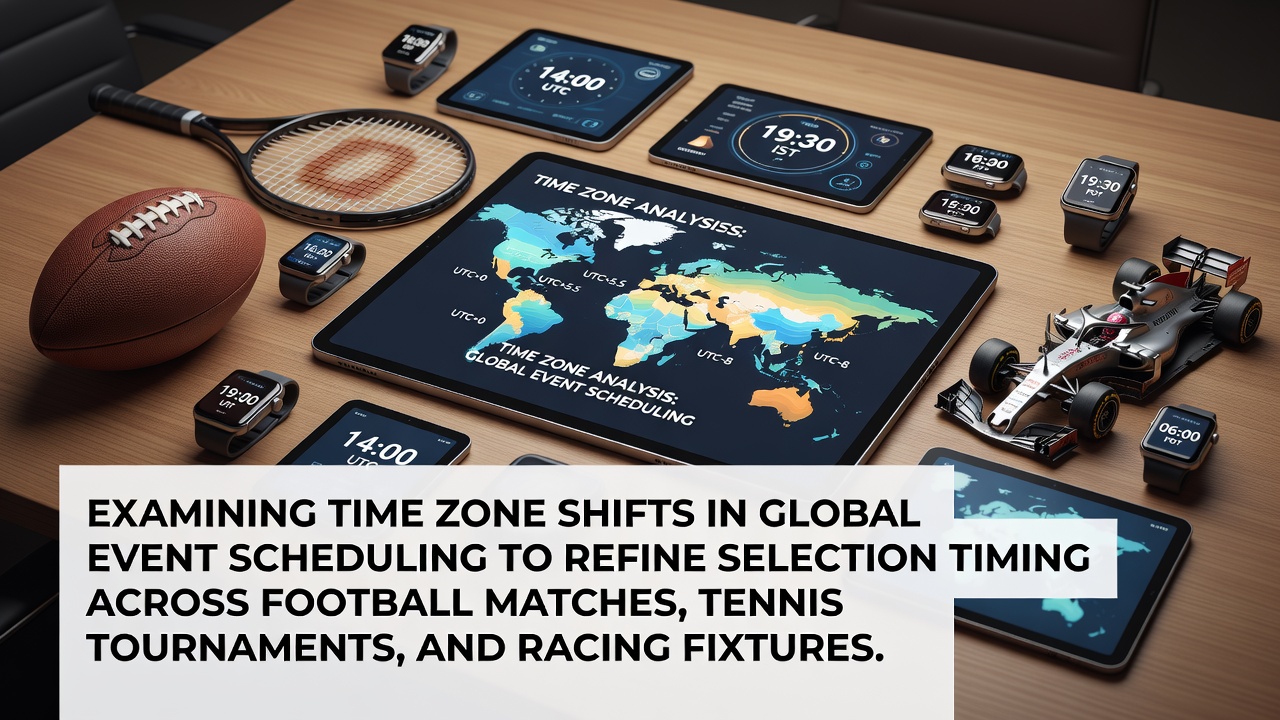
Time Zone Dynamics in Global Sports Scheduling: Football Matches, Tennis Tournaments, and Racing Fixtures
Time zone variations shape how organizers coordinate international calendars across football, tennis, and racing, where events span multiple continents and require precise alignment for participants, broadcasters, and audiences. Data from sports federations shows that mismatches in local times often lead to adjustments in kickoff hours, match durations, and fixture placements to maintain fairness and accessibility. Researchers at institutions like those affiliated with the International Association of Athletics Federations have documented patterns where a six-hour shift between Europe and Asia prompts earlier starts for evening European fixtures to accommodate Asian television windows.
Core Principles of Time Zone Adjustments
Organizers calculate offsets using Coordinated Universal Time as the baseline, then factor in daylight saving changes that differ by region. For instance, North American leagues apply Eastern Daylight Time shifts in spring while European counterparts switch to British Summer Time on different dates, creating temporary windows of four to eight hours between continents. Studies from the Australian Institute of Sport indicate that such discrepancies affect athlete recovery cycles, particularly when teams travel across the International Date Line for preseason tours or tournaments. Those adjustments rely on software tools that model multiple scenarios, allowing schedulers to test start times against projected fatigue data and venue availability.
Football Match Scheduling Across Regions
Football leagues balance domestic priorities with continental competitions such as the Copa Libertadores and UEFA Champions League, where fixtures cross time zones from South America to Europe. Data collected by CONMEBOL shows that matches involving Brazilian clubs often move to afternoon slots in local time to align with evening broadcasts in Spain and Portugal. When August 2026 approaches, overlapping schedules between the FIFA Club World Cup and major domestic leagues will require careful coordination because South American teams face seven-hour differences from European venues. Observers note that federations use rolling windows of 48 to 72 hours between legs to mitigate jet lag, with medical staff monitoring heart rate variability and sleep metrics to refine rest protocols.
Tennis Tournament Timing and Global Reach
Grand Slam events rotate locations across hemispheres, creating distinct challenges for the Australian Open in January, Roland Garros in May, Wimbledon in July, and the US Open in August and September. The ATP and WTA maintain centralized databases that flag potential overlaps, such as when players finish late-night sessions in Melbourne and must prepare for early rounds in Indian Wells. Research published by the University of Queensland's sports science department reveals that a twelve-hour offset between Australia and the Americas correlates with measurable drops in serve accuracy during the first two days after arrival. Tournament directors therefore insert rest days or adjust qualifying rounds to later evening slots when the host city sits west of the prime meridian.

Racing Fixtures and Cross-Continent Coordination
Horse racing calendars integrate meetings from the Melbourne Cup carnival, Royal Ascot, and Breeders' Cup, each anchored in different time zones. The International Federation of Horseracing Authorities compiles annual reports that track how a fourteen-hour gap between Australia and the United States influences post-race recovery and transport logistics for international runners. When fixtures fall in August 2026, the Del Mar meeting in California will overlap with European summer jumps cards, prompting officials to stagger post times so that international simulcast feeds avoid direct clashes. Trainers rely on acclimatization periods of five to seven days, during which horses train at adjusted hours that mirror the destination's local clock.
Integrated Strategies for Multi-Sport Calendars
Cross-sport working groups now share scheduling platforms that incorporate real-time time zone data, venue curfews, and broadcast contracts. European sports associations have piloted joint calendars that flag potential conflicts between football international breaks and tennis Masters 1000 events. Figures from the Canadian Sport Institute demonstrate that unified modeling reduces last-minute rescheduling by 18 percent compared with separate league planning. These systems also account for weather windows at outdoor racing tracks and tennis courts, linking meteorological forecasts with time offsets to protect surface conditions and player safety.
August 2026 presents a notable cluster of events, including the conclusion of several European football transfer windows alongside the US Open tennis and key North American racing meets. Coordination committees review historical patterns from similar periods, such as the 2022 schedule overlaps, to pre-empt broadcast blackouts and athlete welfare issues. Government tourism agencies in host cities, including those in Australia and Canada, supply additional data on flight availability and hotel capacity that feed into the broader planning models.
Conclusion
Time zone management in global sports continues to evolve through data-driven tools and inter-organizational cooperation. Accurate modeling of offsets supports consistent event delivery across football, tennis, and racing while respecting athlete physiology and commercial requirements. Ongoing refinements in August 2026 and beyond will depend on continued integration of regional regulations, travel logistics, and performance metrics from diverse federations worldwide.